
Keeley's Metric Dilemma Is Also Yours
Originally published on The Strategic Ampersand Substack · 9/28/26
While waiting for our coffees at a cafe, a friend was scrolling through Instagram, trying to find a post she wanted to share with me. She suddenly paused and commented on a post’s “low” likes from a well-known individual. “Is this throttled?”
Me: “Let me see… It has over 15K likes and 2K shares. That’s not low. She posted an hour ago.”
Then she commented about a day-old post from a popular local brand. She asked if I thought they were doing well with a recent product launch.
I shrugged and said, “Likes aren’t purchases.” And since we now had our coffees in hand, we decided to walk to their store. When we went in, it was quiet – no one was around. A salesperson strolled over. After exchanging niceties, I asked how the launch went and if they had a sense of online traffic. “It’s flat. You’re one of the few to ask about it.”
“Any thoughts on why?”
“Too much going on – and social, while it’s cool, the launch didn’t move people to check it out.”
The post received well over 100K likes.
Later that night, the Ted Lasso episode “Riches of Embarrassment” (S4E5) aired. A similar situation was noted:
Keeley had a commercial made of the women’s team and posted it in social, which was met with a massive reception. However, since they didn’t sell out as she had hoped, Keeley shared her disappointment with Barbara, her no-holds-barred collaborator.
Keeley: I don’t get it. There was so much support for that video online. Now there’s no one here for us.
Barbara: Well, there’s a big difference between tapping a screen and showing up, isn’t there?
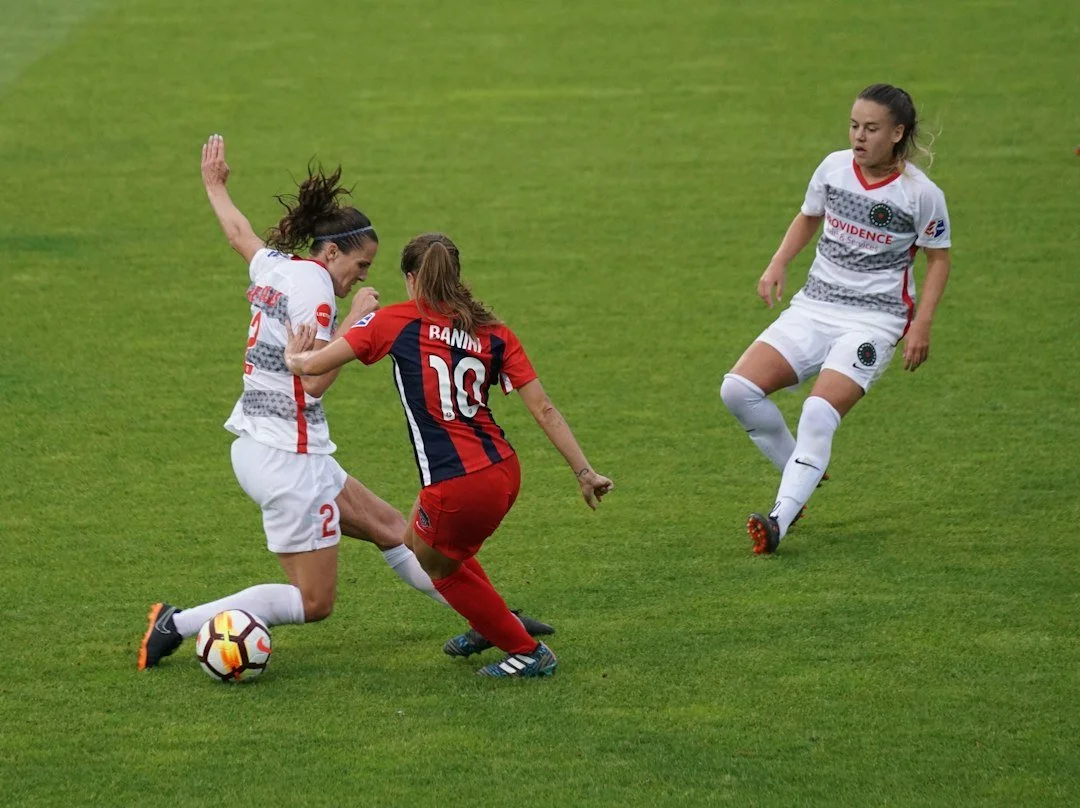
Photo by Jeffrey F Lin
Long-time marketers know “likes don’t mean support” and it remains one of the most important yet one of most ignored truths in modern marketing, especially when speaking with leadership. The gap between:
Online impressions and actual intent
Digital engagement and analog action
Viral community and showing up IRL as community
Social buzz and actual dollars
...is where so many campaigns live and die. Keeley’s moment is the perfect human entry point into a complex, strategic conversation about vanity metrics vs. meaningful outcomes.
What someone sees on their feed as they scroll by needs follow-up — often more than once, and rarely through just one channel. (More on that shortly.) This isn't only a B2C/DTC problem; B2B runs on a longer clock, built on relationship over time rather than a single campaign moment. But the same gap shows up there too — a tap is not a signature on a contract, no matter how long the sales cycle.
First: why don’t people go from tap to action:
Apathy and desensitization: it’s the largest reason on why people don’t take action. We’ve become so desensitized to outrage, to hype, and “act now” messages that we see something, tap to like, and move on.
Entry point cost/investment: with increased costs and budget constraints many are facing right now, I wasn’t surprised the noted brand’s launch didn’t perform well. It’s a higher cost entry point, which could be out of range for folks as kids head back to school (lots of costs there) or recovering from summer adventures while looking at the holidays as their next big expense.
It doesn’t create a solution: the launch doesn’t solve a problem viewers may have in the moment or long-term. It’s a *want*, not a *need* — and going back to the second point: if the money isn’t in the budget, it won’t happen.
There’s a lack of urgency on the consumer’s part: Customers know when something is urgent or not in their life. In Keeley’s case, there are more games coming up and potential fans may be waiting to see how the team performs. For the local launch, there was very little “urgency” — the launch was a new product. It will be around for a while and if the budget is tight, folks will wait until it’s on sale.
100,000 IS NOT JUST A METRIC POINT
Here’s the head scratcher with a number like 100K. Inside platforms, it barely registers anymore. We’re desensitized to big numbers online. A million views doesn’t shock anyone; which means 15K feels like a teeny buzz flying by your ear and 100K likes can feel like the internet’s equivalent of background noise.
But let’s step outside the feed for a second for real world perspective.
NBA stadiums hold an average of 19K fans. 15K is close to a sold-out night at Smoothie King Center in New Orleans (16.8K) or State Farm Arena in Atlanta (16.6K) — nearly full; just a “few” seats shy.
NFL stadiums hold 40K to 80K fans, give or take. For example, Kansas City’s Arrowhead Stadium holds 73.4K people, while Seattle’s Lumen Field holds 69K. Meanwhile, London’s Wembley Stadium holds 90K and for NFL games, 86K.
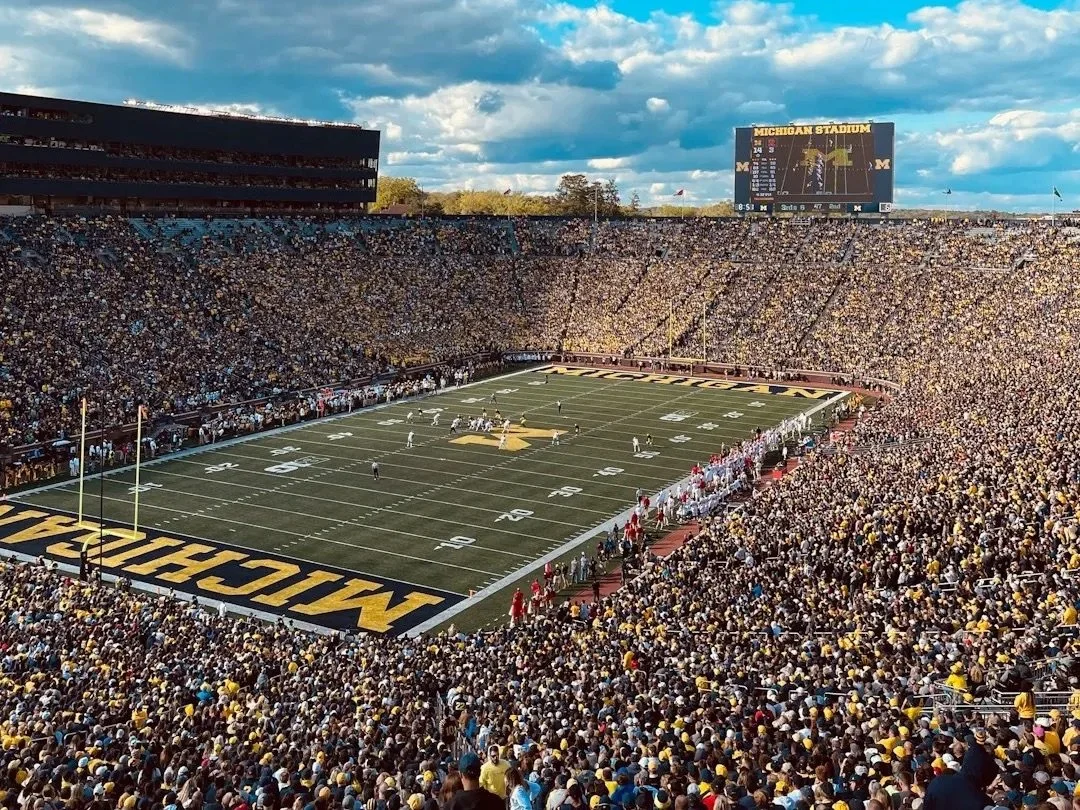
The largest stadium in the US belongs to a university. Michigan Stadium in Ann Arbor holds 107.6K… but I digress.. back to the point of all this....
Whether it’s 15K, 50K, or 100K likes, these aren’t annoying buzzes by our ears or background noise at all. When we compare it to a stadium’s capacity, the perspective can wildly shift for what an “unremarkable” post really means. 100,000 people seeing your content is like standing at the 50-yard line of an almost sold-out game at Michigan Stadium and having every single person there turn toward you at once.
Inside Michigan Stadium, Photo by Aditi Bhanushali
In reality: 100,000 individuals are each mid-scroll, each carrying their own version of tight budgets, balancing back-to-school costs and extracurricular activity schedules, dealing with a hard week, and/or juggling a dozen other things all quietly competing for the same five seconds of attention a brand’s post also wants. Yet: 100,000 pairs of eyes saw the content, had it resonate just enough for them to pause and tap a heart — but no follow up.
And… but… however… that’s Keeley’s exact dilemma: high engagement, low action. The online crowd’s taps felt big. But the real life that same crowd didn’t take literal action in buying enough tickets to sell out the match.
A brand chasing reach is counting those taps. A brand chasing action is trying to engage the actual person behind each one, which is a much harder, much slower thing to do, and it’s the whole idea behind something I keep coming back to in this space: sonder. The recognition the very people scrolling past your post are living a life as complicated as your own — and generally speaking it has nothing to do with you or your brand.
Keeley’s video didn’t fail because it lacked reach. It succeeded at reach but failed because reach was never the actual goal. The goal was activating enough of those individual, complicated lives just enough that some of them would choose to rearrange their evening around a stadium seat.
By the way, after the game, as Keeley was apologizing to the team about the “small” turnout, Lizzie offered perspective:
Lizzie: That crowd was twice as big as our usual home games. You know that, don’t you?
Selling out the stadium was a goal Keeley made for herself. But for the players, simply seeing more people in the stadium made the difference to them. Small growth. Small changes. Consistently showing up in people's feeds is what eventually creates enough momentum to disrupt someone's routine — enough that they actually show up in real life.
BACK TO THE LAUNCH
So, what would I have recommended for that quiet storefront, a few days after their launch that had 100K likes but little foot traffic?
More posts, bigger budgets, and screaming “buy now” won’t cause them to move. This is the part I’ve said to clients more times than I can count: I can build and launch a $1M campaign, but if what’s happening on the backend such as the actual customer’s digital or live experience with the website or in-store reality, doesn’t match what the campaign promised — then while doing my best Don Draper impression: that’s a $1M campaign paying to expose a problem, not solve one.
Instead there are three things done deliberately that start from a simple premise: the potential customer we wish would shift from tap to activation with our brand — and we put ourselves in their shoes to better understand them as we create a campaign to draw them in while also creating less friction.
First: establish trust before reach. A hundred thousand likes is reach. It’s not trust. It’s a “oh look at that shiny thing” snapshot. Trust comes from showing up consistently and someone specific — a person, a community, a voice the audience already believes — vouching for the thing, not just seeing it float by in a feed. It’s offering to solve a problem or a sense of belonging. A brand launching into a new space needs fewer impressions and more people who are willing to say “it’s worth it” out loud to people who will listen to them.
Next: repetition, on purpose. One viral post is a moment. A campaign is a pattern. This is where the mythical “seven touchpoints” comes into play; it’s a reminder a single interaction was most likely NOT going to get the job done alone, but rather help move people toward taking action. The newsletter, the billboard (OOH), the local partnership, the podcast mention, being included in a magazine’s “best of” spread or list, the in-store signage that mentions the same thing the post did: none of that is redundant. It’s the difference between someone half-remembering an ad and someone finally walking in the door because they’ve now encountered the idea various ways, at various moments, during the week.
Last: the friction between liking a post and walking in the door can feel like a ravine to customers so make the bridge easy to cross. If the ask requires driving across town, spending money that wasn’t budgeted, figuring out a QR code, or clicking through a confusing website, most people won’t bother — not because they don’t care, but because the small amount of time they had in the moment wasn’t enough to get them from Point A (“that’s cool”) to Point B (“let’s do it”). The brands that convert impressions into action make the very next step small: QR-linked site that’s easy to navigate on a phone, a walk-in-friendly hour, a reason to come today, and so on. It’s not made easier because the customer can’t figure out the harder path, but because they shouldn’t have to. Every ounce of friction removed is a way of honoring their time, their trust, and what they’ve already invested in a brand by paying attention to it in the first place.
None of that shows up while checking vanity metrics. It shows up when someone’s standing at the cash register, signing up for a newsletter, tapping all the way through to purchase what’s in their cart, taking a seat at the bar, reserving a table, or in Keeley’s case, buying a ticket for a seat.
And here’s the trade I’d make every time: I’d rather have 1,000 people who are genuinely, heavily invested 50 to 70% of the time (because they have real lives and budgets) — the ones who’ll actually show up, buy, get involved, and tell someone else about it — than a million people who scroll by and thought a post was cool. A thousand real ones will fill a section. A million that’s-cool won’t fill a single row.
A thousand people who show up will always outperform a million people who simply approve.
That’s not a smaller goal. It’s a clearer one. Trust, repetition, and low friction aren’t consolation prizes for brands that can’t go viral — they’re how you turn a crowd that likes you into a crowd that shows up for you.
The tap-to-like was never the finish line. It was step one of the mythical seven — and the brands that build for all seven are the ones whose crowd actually shows up.

A friend paused mid-scroll to ask if a post's "low" likes were being throttled. It had 15K likes and 2K shares — that's not low. That same night, a Ted Lasso episode showed the exact same problem: a commercial with massive online support yet a less-than-desired attendance at a match. Here's what 100,000 likes actually look like translated into a real crowd — and why the number that matters isn't the one everyone's counting.