
Show, Don’t Tell
Originally published on The Strategic Ampersand Substack · 5/27/26
My 7th grade English teacher had a weekly 15-minute writing challenge called Show, Don’t Tell. She’d give us a prompt, like “The phone is on the couch” and we had to show it to the reader. For example: “She buried the phone under a pile of mis-matched throw pillows on the couch because she hated the ringing sound. And the only way to find the phone was by following its cord through the mountanous pile.” It was about creating a visual for the reader instead of stating the basic element.
It’s one of those lessons that has followed me beyond her classroom; through high school, through college, into event planning, and eventually into marketing and brand strategy. So much of my work requires me to “show” a service or product in writing, whether it’s through a proposal, strategy, or in execution. The prompt changed. However the concept never did.
And thanks to this, here’s what I’ve learned after 15+ years of building these brand programs: the brands breaking through aren’t the ones that say the most. They’re the ones that show the most.
FOLD IN THE CHEESE, DAVID
If you’ve seen Schitt’s Creek, you know the scene (S2, E2). If not, a quick overview: Moira Rose wants to make enchiladas from a family recipe with David (her son). As David is mixing the sauce, Moira gives the instruction: fold in the cheese. David doesn’t understand what the means.
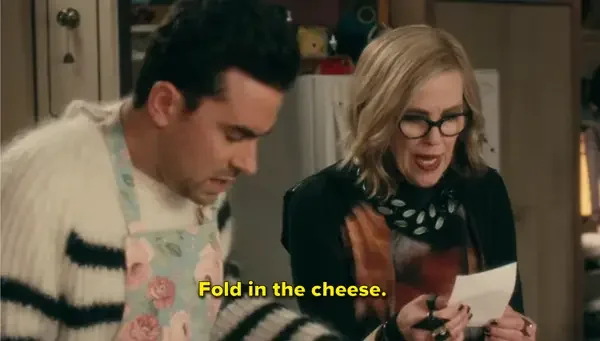
Schitt’s Creek; CBC/Pop TV
So Moira repeats herself, this time with more emphasis: Fold. In. The. Cheese.
David still doesn’t get it. With absolute confidence she tells him again, but louder. And the more David fails to understand, the more exasperated she gets. David finally says “If you say ‘fold in’ one more time.”
It’s one of the show’s most memorable scenes with a repeatable quote (similar to “Pivot!”). And it’s one of the most accurate depictions of how a lot of brands communicate.
“We’re the industry leader.”
“Best-in-class solutions.”
“We deliver results.”
The audience doesn’t know why the brand is an industry leader. Or how a brand offers best-in-class solutions. Or what the results are or what that means for them, the audience. So the brand increases the ad spend to further the message. It creates more content that says it louder: “we’re the industry leader with best-in-class solutions that deliver results!” Yet <insert sigh> we still don’t know how, when, where, or why to fold in the cheese - or what “fold in” even means.
HOW JULIA CHILD FOLDS IN THE CHEESE
Julia Child didn’t tell American audiences French cooking was approachable. She showed them. On television, in real time, with flour on her apron and an arsenal of butter. She assumed nothing about her audience’s skill level but everything about their curiosity.
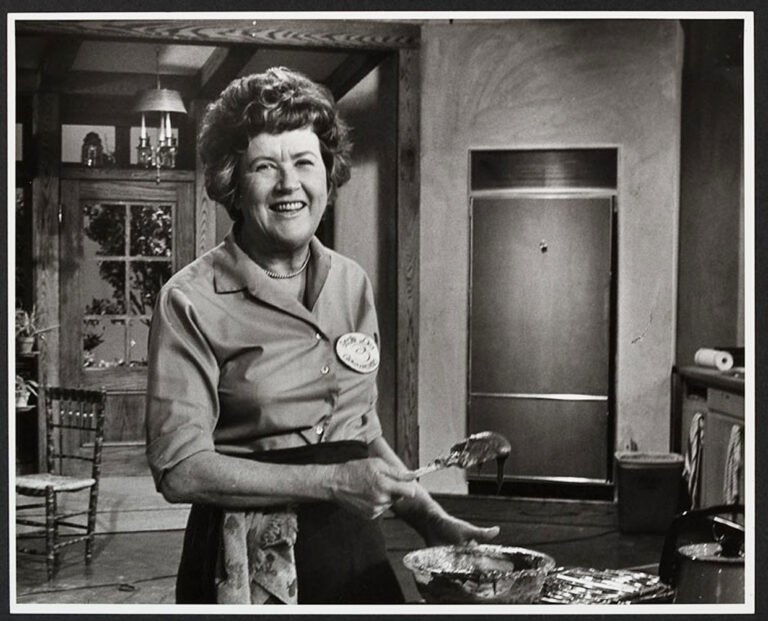
The French Chef; WGBH
She met people where they were and brought them along. And somewhere in the process of watching her make a cheese soufflé, viewers stopped being intimidated and started believing they could do it too. Not because she said they could. Because she showed them what it looked like when someone who knew what they were doing made the process easily relatable - and they learned how to fold in the cheese too.
Even how she started in television was a literal example of Show, Not Tell: she was invited to talk about her cookbook on the show I’ve Been Reading. During the interview, she pulled out a pan, butter, and eggs from her bag; plugged in a hot plate; and did a live demo on air; she made an omelet in real time. She showed audiences in that brief moment how simple an omelet was to make… and the rest was history.
That’s category creation. Julia Child didn’t just announce she was making French cooking accessible to American kitchens. She showed it consistently with humorous wit that drew viewers in. And in doing so, alongside audiences and TV executives, she created an entire category: the cooking show series.
Bob Ross did the same thing with painting. Bob Vila did it with home renovations. Stacy London did it with fashion. The format changes. The concept is identical: slow down, show the work, and build trust with the audience. If you’re doing it right, over time, audiences will follow and engage.
CATEGORY CREATION & YOUR BRAND
First and foremost: what is category creation? Per The Marketing Advisor: “[It’s the] process of identifying and establishing a new space in the marketplace not previously defined… This proactive strategy goes beyond merely competing within existing categories; instead, it focuses on pioneering a new landscape where the business can lead and shape customer perceptions.”
When a brand acts like Julia Child, by slowing down to guide instead of announcing, something shifts for audiences. It’s not just a message landing more clearly. It starts building trust because - by the brand showing up to do the work - it’s an important acknowledgment: “I don’t expect you to already know this. I’m here to bring you along.”
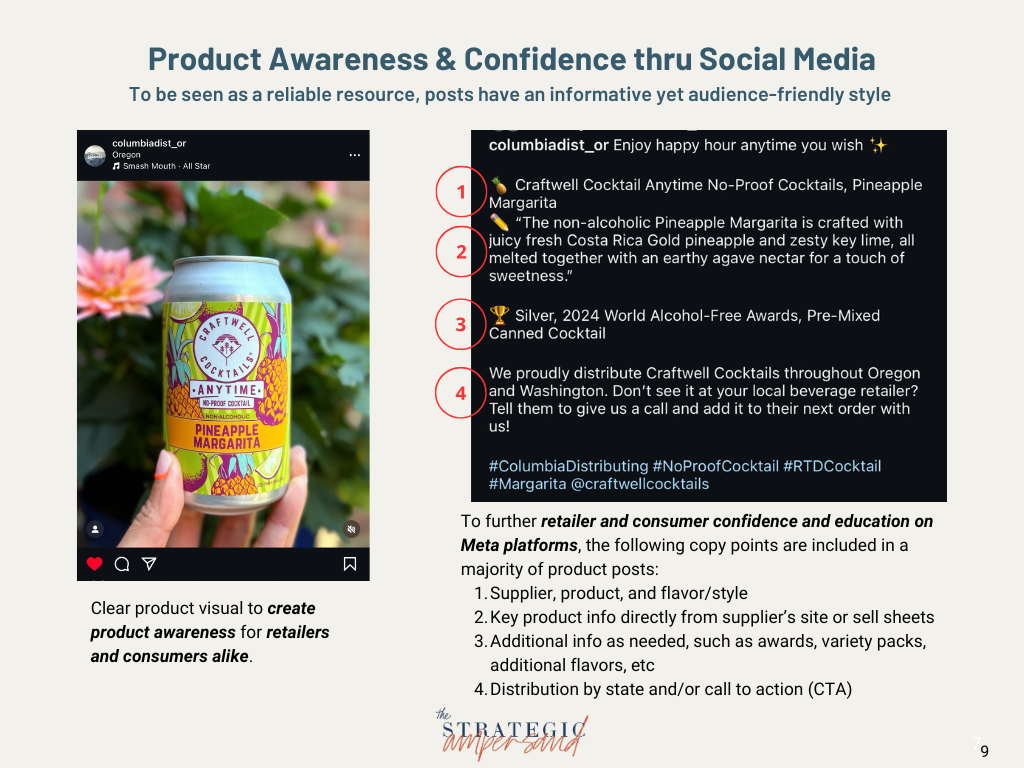
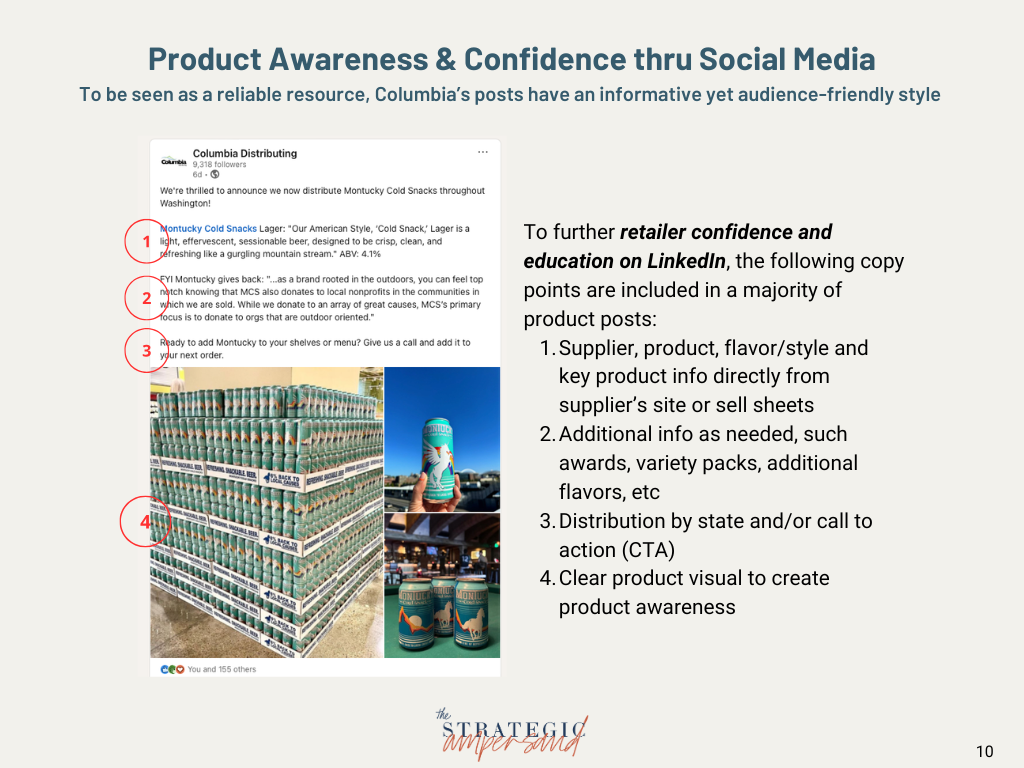
Here’s a real life example in how this shows up in social media marketing: while working with a beverage distributor, I saw a massive gap in how regional - and national - competitors spoke about their product portfolio. So I’d include four key elements in product posts to “show” the product beyond an image:
Supplier, product, and flavor/style
Key product info directly from supplier’s site or sell sheets
Additional info as needed, such as awards, variety packs, additional flavors, etc
Distribution by state and/or call to action (CTA)
That’s digital empathy in practice and on repeat. It’s the recognition every person in your audience arrives with a different experience, a different starting point, a different relationship to what you’re offering. Some of them are Davids. Some of them are practiced home chefs. The brands that show rather than tell create space for both.
I could’ve just stated the name of the brand with a punchy caption and said “good enough;” however I treated every post as if someone would see the distributor’s posts for the first time - and assumed nothing about the audience’s knowledge of the distributor’s work, the supplier, or product shown.
The brands doing this well don’t just explain their product. They demonstrate their worldview and how they fit into *your* world. They show what they believe, how they operate, and what they care about; and they let the audience draw their own conclusions. Which, it turns out, are far more persuasive than any conclusion the brand could have announced.
You’re telling me your product will save me hours? Show me how to use it. Show me why it matters. Show me when and where I’d use it. Show me what my life looks like after I use it.
Category creation isn’t a positioning exercise. It’s a prompt to invite audiences in with curiosity and in return, they invite you into their world. You don’t claim the category. You demonstrate it - and do so clearly, so consistently - that eventually the category is established.
Just like Julia did. So let’s fold in the cheese, together.


"My buyers don't need social media." "It's full of noise and nonsense." I've heard versions of this sentence from a lot of smart, experienced people - and most of the time, it's a personal opinion cosplaying as a strategic decision. Here's how to tell bias from data, and why it matters.