Social Strategy
Featured









Imagine you're at a concert. The lights go dark. The crowd gets quiet. The band walks on, the dancers take the stage - and then BOOM, the headliner arrives. The show is unforgettable. Not because of the headliner alone, but because of everything working together to make that moment inevitable. That's a campaign. And most brands are skipping straight to Beyoncé.
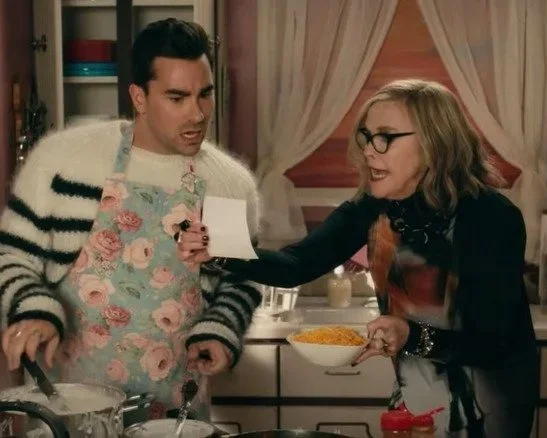
In 7th grade, my English teacher ran a weekly writing challenge called Show, Don't Tell. The prompt changed every week. The principle never did. Fifteen years into building brand programs, I can tell you: the brands that break through aren't the ones that say the most. They're the ones that show the most. Moira Rose never picked up the spoon. Julia Child never put it down. There's a whole brand strategy lesson in there.
A business is a kitchen. HR is the fridge. Operations is the oven. Finance is the plumbing. Sales is the sink. Marketing is the counter - the surface everything moves across. It's not the heaviest appliance in the room. But take it out and suddenly nothing has anywhere to land. You don't realize how much you need the counter until you're trying to prep a meal over the sink.
"In case your dad didn't show you this" is a good hook. It creates instant connection and gets clicks. But the more I watched, the more I found myself thinking — wait. What did my dad actually gatekeep from me? He was deployed. And I suspect some version of that story belongs to a lot more people than that hook accounts for. This is what digital empathy in content strategy actually looks like.
There's a line in The Princess Bride that lives rent-free in my head. Westley - recovering from being mostly dead - surveys an impossible situation and says: "I mean, if we only had a wheelbarrow, that would be something." It's the Swiss Army Knife of problem-solving quotes. Not a complaint. A rallying cry. Marketing works the same way - but only when the rest of the business is ready to storm the castle together.
I’ve spent the last decade-plus building brand programs, running campaigns, writing copy, directing creative, and thinking constantly about what it means to actually connect with an audience rather than just reach one. To recognize pain points is to acknowledge someone’s actual lived experiences. To build a content strategy around those experiences is to create confidence not just in the brand, but in the individual themselves.
Partnering with an individual can be a great way to help build brand awareness, announce a new service, or introduce a product to new audiences. Having a process in place - a checklist of sorts - before asking an Influencer, Ambassador, or Affiliate to work with your brand will help make it a smoother process.
“Influencer” has become a murky catch-all for folks who contract with brands to promote products or services. Depending on your marketing strategy and sales goals, contracting with Influencers, Ambassador, and/or Affiliates can help further brand awareness, attract and educate new and current audiences, and increase sales.
High-level daily content themes are basically post prompts to help further branding consistency. They’re not the priority for posting; these are purely content fillers to be used between announcements or whatever other points you wish to share with your community and followers on social media. It’s important to think of daily content themes as ways to further brand awareness, build community, or offer social listening.
"My buyers don't need social media." "It's full of noise and nonsense." I've heard versions of this sentence from a lot of smart, experienced people - and most of the time, it's a personal opinion cosplaying as a strategic decision. Here's how to tell bias from data, and why it matters.